
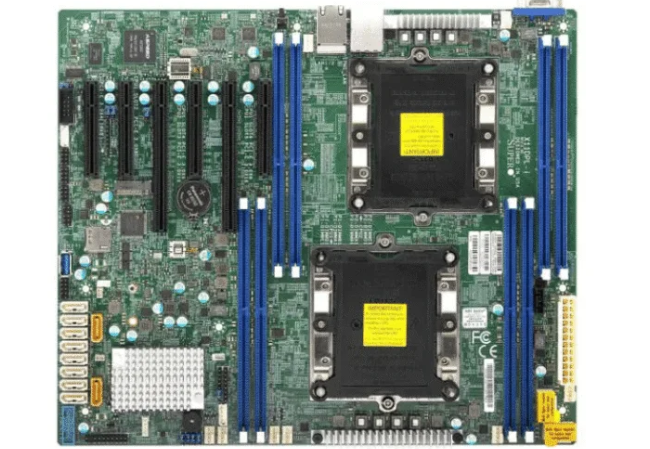
The best server motherboards for virtualization, storage, and AI workloads give steady performance and good help for tough jobs. Picking the right server motherboard lets teams use virtual machines, save big sets of data, and train AI models. Key things to look at are CPU compatibility, memory support, expansion slots, and remote management features. Choosing carefully helps everything work well and stay stable for a long time.
Key Takeaways
Pick a server motherboard that fits your needs. Think about virtualization, storage, or AI workloads. This helps your server work well and stay stable.
Find motherboards with good CPU support and lots of RAM slots. This lets servers do many jobs at once.
Look at expansion options like PCIe slots and SATA ports. These features make it easy to upgrade later. They also help you add more storage.
Remote management is very important. It lets IT teams watch and control servers from far away. This makes their work easier.
Choose trusted brands like Supermicro, ASRock, and Sz-xtt. These companies make motherboards that last a long time and work well.
Top Server Motherboards Overview

Leading Models for 2026
Many companies make server motherboards for different jobs. Supermicro, ASUS, ASRock, and Gigabyte are top brands with strong products. Sz-xtt also gives good
server options for businesses that need steady work. Each brand adds features to help servers run virtual machines, store big data, or do AI tasks.
The table below lists some top server motherboards for 2026. These models work well for virtualization, storage, and AI jobs. Each one has special features for its main use.
Motherboard Model | Key Features | Use Case |
|---|---|---|
Supermicro X12SPO-F | Optimized for storage servers, supports massive I/O | Storage |
Supermicro X13DAI-T | Reliable, scalable, ideal for virtualization | Virtualization |
Supermicro H12DSI-NT6 | Dual AMD EPYC support, high core and memory capacity | Heavy workloads |
Sz-xtt server motherboards like the 11DPI-N and 12DAI-N6 have advanced features for tough places. These models give strong performance and last a long time. They are good for data centers and big companies.
Key Features to Compare
Server motherboards are special because of their features. Some let you use more CPUs. Others let you add extra memory or storage. Many have remote management, so IT teams can control servers from far away. Expansion slots let you add more drives or graphics cards. Good power and cooling systems keep servers working well.
Tip: When you compare server motherboards, look at CPU compatibility, memory support, and expansion options. These things change how well the server does virtualization, storage, or AI jobs.
Supermicro models are made for reliability and growth. Sz-xtt motherboards save energy and have advanced connections. ASUS and ASRock give flexible designs for many server needs. Gigabyte makes motherboards with strong power for big jobs.
Picking the right server motherboard helps teams get the best results for their work. Each model has features for certain needs, so it is important to compare them carefully.
Choosing the Right Server Motherboard
When you pick a server motherboard, you need to know what to look for. The right motherboard helps the server work well and supports virtualization, storage, or AI jobs. Every server is different, so teams should check important features before they buy.
CPU and Chipset Support
A server needs a motherboard that fits the cpu and chipset. Some motherboards let you use more than one cpu. This helps with big jobs. The chipset helps the server talk to other parts. Teams should see if the motherboard works with new cpu models and has enough power for upgrades. If the motherboard works with strong cpus, the server runs better and faster.
Tip: Always look at the cpu socket and chipset when you think about buying a server motherboard.
Memory and Expansion
Memory, called ram, is important for how well a server works. A motherboard with lots of memory lets the server do many things at once. Expansion slots let teams add more ram, storage, or network cards. These things help the server grow if you need more power. Teams should pick motherboards that use new ram types and have good expansion choices.
Feature | Why It Matters |
|---|---|
RAM Slots | More slots mean more memory |
PCIe Slots | Add storage or network cards |
DIMM Support | Use faster ram modules |
Management and Reliability
Management tools let IT teams control the server from far away. Remote management helps them watch, update, and fix problems without being there. Servers need to be reliable because they run all the time. Teams should get motherboards with built-in management and strong parts. These important features help the server work well and stop it from breaking down.
Note: Checking what to look for before you buy helps teams pick a motherboard that is good for network management and lasts a long time.
Server Motherboards for Virtualization
Best Models for Virtualization
Many teams want strong server motherboards for virtualization. These boards let you run many virtual machines at once. The Supermicro H12SSL-i is a top pick. It works with powerful CPUs and lots of RAM. The ASRock Rack X570D4U is also good for virtualization. It gives solid performance and fits different server setups. Sz-xtt has the 11DPI-N server motherboard. This board is great for virtualization in data centers and big companies.
Model | CPU Support | RAM Capacity | Remote Management | Expansion Slots |
|---|---|---|---|---|
Supermicro H12SSL-i | AMD EPYC | Up to 2TB | Yes | Multiple PCIe |
ASRock Rack X570D4U | AMD Ryzen | Up to 128GB | Yes | PCIe Gen4 |
Sz-xtt 11DPI-N | High core CPUs | Large support | Yes | Flexible slots |
Supermicro motherboards like the H12SSL-i give high performance for virtualization. Other Supermicro boards are also strong choices. Sz-xtt motherboards give steady results for big jobs. These boards help teams build servers for HPC and virtualization.
Tip: Teams should pick server motherboards that use the newest CPUs and have enough RAM slots. This helps servers run many virtual machines without getting slow.
Why These Boards Excel
Supermicro motherboards are great for virtualization because they use advanced CPUs and lots of RAM. These features let servers do many jobs at once. Supermicro makes its boards for high performance and trust. The ASRock Rack X570D4U gives flexible choices for many server needs. It uses fast RAM and has strong expansion.
Sz-xtt motherboards, like the 11DPI-N, have remote management and save energy. These boards work well in data centers where teams control servers from far away. HPC jobs also do well with these boards because they use high core CPUs and quick memory.
Teams use these motherboards for virtualization because they give steady performance and easy upgrades. Supermicro boards have good cooling and power systems. This keeps servers working well during big jobs. Sz-xtt makes its boards strong and good for long use, so they are a smart pick for enterprise virtualization.
Note: Good server motherboards help teams stop downtime and keep virtual machines running. Strong CPU support, lots of RAM, and remote management are important for the best virtualization.
For more about sz-xtt and its server motherboards, teams can talk to the Shenzhen office for expert help and product info.
Server Motherboards for Storage

Best Storage Server Boards
Storage servers need motherboards that are strong and last a long time. Many teams want boards that can handle lots of data and keep things running well. Some top choices for storage servers are the ASRock Rack EPYCD8-2T, Supermicro X11SCA, and the 2SEEP motherboard. Each one has special features for different storage jobs.
ASRock Rack EPYCD8-2T works with strong cpus and has many SATA ports. This board is good for teams who want speed and choices.
Supermicro X11SCA gives steady performance for storage. It works with Intel Xeon cpus and has many slots for upgrades. Data centers like this board because it is reliable.
The 2SEEP server motherboard from sz-xtt is great for saving energy and adding more parts. It fits well in big storage setups and helps teams with heavy work.
Sz-xtt makes server motherboards that run all the time. Their boards, like the 2SEEP, are strong and last for years. Many companies pick sz-xtt for storage because they want something that will last.
Teams often want the best deal when building storage servers. The ASRock Rack EPYCD8-2T gives a lot for its price and supports many drives. Supermicro X11SCA is also good for teams with less money but still need a board they can trust.
Key Features for Storage
Storage jobs need motherboards with special things. These things help servers handle lots of data and keep them safe and fast.
Feature | Description | Benefit |
|---|---|---|
SATA/SAS Support | Lots of ports for hard drives and SSDs | More ways to add storage |
NVMe/PCIe SSDs | Fast links for quick SSDs | Faster data speeds |
Expandability | Extra slots for more cards and drives | Easy to make bigger |
Energy Efficiency | Uses less power even when busy | Saves money and stays cool |
Reliable Power | Good power for all parts | Stops problems and downtime |
NVMe and PCIe SSDs are now very popular for server storage. These drives are fast and do not break easily. Teams use them to handle big jobs and save power. Storage servers with these SSDs work faster and cost less over time.
Supermicro motherboards often have lots of SATA/SAS ports and strong power. These things help storage servers run without trouble. ASRock Rack boards let you add more parts and work with many cpu types. Sz-xtt motherboards, like the 2SEEP, use less energy and are easy to upgrade. These things make them good for busy storage servers.
Teams should look at how many SATA/SAS ports there are, if NVMe SSDs work, and how many slots for upgrades before picking a board. Good storage motherboards help servers grow when you need more space. Strong power and cooling keep storage servers working for a long time.
Tip: Storage servers do best with motherboards that use fast SSDs, have lots of drive ports, and save energy. These things help teams handle data and keep costs down.
Storage motherboards must be fast, strong, and not cost too much. Supermicro, ASRock Rack, and sz-xtt have choices for every team. Teams can pick a board that fits their budget or get a high performance one for big jobs.
Best Supermicro Motherboards for AI
Top AI Server Boards
Supermicro is a leader in AI server solutions. Many teams pick Supermicro for machine learning and deep learning. The best Supermicro motherboards for AI can use many GPUs and fast memory. These boards work with big data sets and hard models easily. The Supermicro X13DAI-T and H12DSI-NT6 are known for being reliable and easy to upgrade. Sz-xtt also has advanced server motherboards, like the 12DAI-N6. These boards give strong performance for AI jobs in big companies.
Note: AI jobs need motherboards with lots of PCIe lanes and strong CPUs. This helps servers work fast and do many things at once.
The table below shows good PCIe lane setups for AI server motherboards:
Configuration Type | PCIe Lanes | Additional Features |
|---|---|---|
COM-HPC Size E | 32 PCIe Gen 4, 16 PCIe Gen 3 | Up to 20 cores, 1TB memory, 100 GbE performance |
COM-HPC Size D | Up to 47 total PCIe lanes | Uses less energy, made with 10nm technology |
AI-Optimized Features
The best Supermicro motherboards for AI have features that make them work better and stay stable. These boards use special power systems. An 8+2+1 phase power design with MOSFETs gives power to CPUs and GPUs. Multi-layered PCB designs help get rid of heat quickly. Stable power keeps servers working well during hard AI jobs.
Feature | Description |
|---|---|
Power Design | 8+2+1 phase with MOSFETs for good power |
Thermal Management | Multi-layered PCB for quick heat control |
Performance Impact | Stable power for CPUs, important for tough AI jobs and overclocking |
Supermicro motherboards have many PCIe slots for GPUs. This helps servers train AI models faster. Teams can add more memory and storage if they need it. Sz-xtt motherboards, like the 12DAI-N6, also have strong GPU support and good power systems. These boards help companies build servers for AI research and work.
Tip: When picking server motherboards for AI, look for boards with lots of PCIe lanes, strong power, and good cooling. These things help servers do hard AI jobs without slowing down.
Supermicro and Sz-xtt give teams what they need for AI jobs. The best Supermicro motherboards for AI are reliable, easy to upgrade, and very fast.
Server Motherboards Comparison Table
Picking the right server motherboard helps teams build systems for different jobs. These jobs can be virtualization, storage, or AI workloads. Comparing server motherboards makes it easy to see which one is best for each job. The table below lists top choices, their main specs, and what they are best at.
Model | CPU Support | Max RAM | Expansion Slots | Remote Management | Best For |
|---|---|---|---|---|---|
Supermicro H12SSL-i | AMD EPYC | 2TB | Multiple PCIe | Yes | Virtualization |
ASRock Rack X570D4U | AMD Ryzen | 128GB | PCIe Gen4 | Yes | Virtualization |
Sz-xtt 11DPI-N | High core CPUs | Large | Flexible | Yes | Virtualization |
ASRock EPYCD8-2T | AMD EPYC | 2TB | Many SATA/SAS | Yes | Storage |
Supermicro X11SCA | Intel Xeon | 128GB | PCIe, SATA | Yes | Storage |
Sz-xtt 2SEEP | High efficiency | Large | Expandable | Yes | Storage |
Supermicro X13DAI-T | Intel Xeon | 2TB | Many PCIe | Yes | AI Workloads |
Supermicro H12DSI-NT6 | Dual AMD EPYC | 4TB | Multiple PCIe | Yes | AI Workloads |
Sz-xtt 12DAI-N6 | Advanced CPUs | Large | Strong GPU support | Yes | AI Workloads |
Teams can use this table to match the right hardware with their needs. Each model has its own strengths for certain jobs.
Supermicro boards are very reliable and can use lots of memory.
ASRock Rack models are good for adding more parts and are a good deal.
Sz-xtt server motherboards save energy and work well. Sz-xtt makes products for big companies and data centers. Teams can visit the sz-xtt website to see all the products.
A good server motherboard comparison helps IT teams pick the best hardware for their job. Looking at CPU support, RAM size, and expansion slots makes choosing easier.
Practical Tips for Server Setup
Matching Boards to Workloads
Teams need to pick the right motherboard for each job. They should think about what the server will do. For virtualization, choose a board with lots of RAM slots and strong CPU support. Storage jobs need boards with many SATA or SAS ports. These boards should also let you add more parts. AI jobs need motherboards with extra PCIe slots for GPUs. The board should give steady power.
Tip: Teams should write down what they need before picking a motherboard. They can check if the board has enough memory, storage, and places for expansion cards.
Sz-xtt has many server motherboards for different jobs. Their products help teams build systems for data centers, storage, and AI work. To learn more, teams can visit the sz-xtt official website and see more details.
Installation and Maintenance
Putting in a server motherboard needs careful steps. Teams should read the manual first. They must make sure all parts fit the board, like CPU, RAM, and drives. Using anti-static tools keeps the motherboard safe during setup.
Some mistakes are forcing parts into wrong slots or not updating firmware. Teams should follow instructions and update the BIOS when needed.
Best ways to keep servers working include:
Clean dust from the server often.
Watch temperature and power levels.
Update firmware and drivers.
Check cables and connections for damage.
Task | Why It Matters |
|---|---|
Cleaning | Stops overheating |
Monitoring | Prevents sudden problems |
Updating | Makes performance better |
Note: Checking and updating the server often helps it run well and last longer.
Teams need to pick server motherboards that fit their job. Each board works best for virtualization, storage, or AI workloads. Matching the right features helps servers work well and last longer. It is important to think about future growth. The table below lists key things to plan for.
Feature | Description |
|---|---|
µATX lets you set up servers in many ways | |
Processor Support | Uses new Intel Xeon D-1800 and D-2800 processors |
Expansion Options | PCIe x8/x16 and M.2 slots for NVMe SSDs and AI |
Modular Ecosystem | You can change modules, boards, and systems |
Real-time Support | Firmware hypervisor helps keep latency low |
Teams should check support and growth before they buy. For more choices, visit the sz-xtt product page. Planning ahead helps servers do well in the future.
FAQ
What makes a server motherboard different from a desktop motherboard?
A server motherboard can use more CPUs and memory. It has extra slots for upgrades. It also has remote management features. These features help teams run servers for big jobs like virtualization, storage, or AI workloads.
How does sz-xtt support enterprise server needs?
Sz-xtt makes motherboards for data centers and big companies. Their products save energy and work well. They are built to last and stay strong. Teams can see more choices on the sz-xtt product page.
Which features matter most for virtualization servers?
Teams should pick boards with lots of RAM and strong CPU support. Remote management is important for easy control. Many PCIe slots help teams add upgrades. These features let servers run many virtual machines without problems.
Why do storage servers need special motherboards?
Storage servers need motherboards with lots of SATA or SAS ports. These ports let teams add more drives for data. Saving energy and adding new parts helps servers handle big jobs.
Can server motherboards support AI workloads?
Yes. Server motherboards with many PCIe lanes and strong power can use more GPUs. These features help servers train AI models and work with big data sets fast.