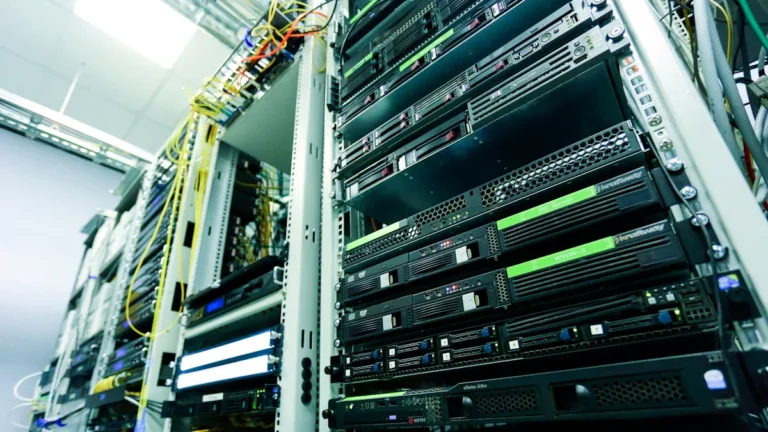


You notice big differences in rackmount server chassis models when you look at build quality, cooling, expandability, and price. Tough materials keep your server safe and help it work hard. Good cooling helps your server run well. Expansion slots let you add more storage and change things as you need. Smart design helps you keep cables neat and makes fixing things easier. Picking the right server chassis helps you do your work and meet your business goals.
Key Takeaways
Pick a server chassis built with tough steel or aluminum. This helps it last longer and keeps it safe. – Find one with good cooling, like fans and vents. This stops the server from getting too hot and keeps it working well. – Choose a chassis that lets you add more storage or parts later. This makes it easy to upgrade as you need more space. – Make sure it has good cable management. This helps air move better, makes fixing things easier, and keeps the server working right. – Think about what you need for your business, big or small. Pick a chassis that matches your budget and how well you want it to work.
Key Features of Rackmount Server Chassis

Build Quality
You want a server chassis made from strong materials. These materials protect your hardware from damage. Most good rackmount server chassis use steel or aluminum. Steel is very strong and lasts a long time. Aluminum is light but also tough and lasts long. Here is a simple table about these materials:
Material | Properties |
|---|---|
Steel | Very strong and lasts a long time |
Aluminum | Light but tough and lasts long |
Models like the 314L65 and 316H-T3 use these materials. They help keep your servers safe in busy places. Good build quality helps your server work hard and stay smooth.
Cooling Efficiency
Servers get hot when they work. Good cooling helps your server stay cool and work well. Many server chassis, like the Supermicro 4U, use fans and vents. Fans pull cool air in from the front. Hot air goes out the back. This keeps your server from getting too hot. These cooling features help your data center stay safe and steady.
Expansion Options
Sometimes you need more storage or new features. Top server chassis models let you add more parts easily. For example, the INWIN RS212-02M can hold up to 12 drives. It also has up to 7 PCI slots. Here is what you can find:
Feature | Details |
|---|---|
Drive Bays | 12 drives you can swap out fast |
PCI Slots | Up to 7 small PCI slots |
Maintenance | Easy to open for upgrades |
This makes it easy to use blade servers or single-socket servers. You can also use it for cloud or network needs. You can grow your server to fit your needs.
Cable Management
Neat cables help your server work better. Good cable management keeps wires tidy. This lets air move around easily. It stops your server from getting too hot. It also makes fixing or upgrading your server easier. Good cable management helps your server stay reliable and ready.
Tip: Keeping cables neat helps air flow and makes fixing problems faster.
With these features, your rackmount server chassis can help your servers work well, grow, and stay strong.
Comparing Popular Server Chassis Models

Model Overview
You see many server chassis models in the market. Each model has its own strengths. Some models work best for high performance needs. Others fit small business setups. You can find models like the 314L65, 314S48, 314S55, 316H-T3, 316H-T3E, ECGOIOE 2U/4U, Supermicro 4U, and QNAP NAS. These server chassis help you build a strong foundation for your servers.
Here is a table that shows the main specifications for popular server chassis models:
Model | Form Factor | Drive Bays | Expansion Slots | Cooling System | Power Supply | Hot-Swap Support |
|---|---|---|---|---|---|---|
314L65 | 2U | 8 | 6 | Dual Fans | Redundant | Yes |
314S48 | 4U | 12 | 8 | Quad Fans | Redundant | Yes |
314S55 | 4U | 16 | 10 | Quad Fans | Redundant | Yes |
316H-T3 | 3U | 10 | 7 | Triple Fans | Redundant | Yes |
316H-T3E | 3U | 12 | 8 | Triple Fans | Redundant | Yes |
ECGOIOE 2U | 2U | 8 | 6 | Dual Fans | Standard | Yes |
ECGOIOE 4U | 4U | 16 | 10 | Quad Fans | Standard | Yes |
Supermicro 4U | 4U | 24 | 8 | Quad Fans | Redundant | Yes |
QNAP NAS | 2U/4U | 8/16 | 4/8 | Dual/Quad Fans | Standard | Yes |
You notice that each server chassis offers different form factors and drive bay options. Some models, like the Supermicro 4U, give you more storage for large data center workloads. Others, like the QNAP NAS, work well for cloud computing and small business needs.
Feature Comparison
When you compare server chassis models, you need to look at size, cooling, expandability, and cost. These features help you match your server to your performance requirements.
Size and Form Factor
You choose the form factor based on your rack servers and space. A 2U chassis fits smaller setups. A 4U chassis gives you more room for storage and blade servers. Some models, like the 316H-T3E, offer extra expansion slots for networking and cloud workloads.
Cooling System
Cooling keeps your servers running smoothly. Models with quad fans, like the 314S55 and Supermicro 4U, handle high performance tasks. Good airflow helps your server stay cool during heavy workloads. You get reliable cooling for your data center.
Expandability
You want to add more drives or PCIe cards as your needs grow. The 314S48 and ECGOIOE 4U let you install up to 16 drives. You can use these server chassis for single-socket servers or blade servers. You get flexibility for cloud and networking upgrades.
Cost
Server chassis prices vary. Here is a list of average costs for leading models:
Nuc Rackmount: 2,400 – 2,500 USD
RS PRO 1U 19-Inch Rack Mount Case (44 x 153mm): 4,702,444.25 VND
RS PRO 1U 19-Inch Rack Mount Case (44 x 254mm): 5,816,384.77 VND
RS PRO 2U 19-Inch Rack Mount Case Ventilated (482.6 x 88.1 x 245mm): 2,614,538.08 VND
RS PRO 3U Rackmount Enclosure Ventilated (133 x 483 x 466mm): 7,390,840.52 VND
You see that cost depends on size, features, and expandability. You pick a server chassis that fits your budget and your performance needs.
Note: More drive bays and expansion slots mean higher scalability for your servers.
Summary Table: Key Feature Comparison
Feature | 314L65 | 314S48 | 314S55 | 316H-T3 | 316H-T3E | ECGOIOE 2U/4U | Supermicro 4U | QNAP NAS |
|---|---|---|---|---|---|---|---|---|
Size | 2U | 4U | 4U | 3U | 3U | 2U/4U | 4U | 2U/4U |
Cooling | Dual | Quad | Quad | Triple | Triple | Dual/Quad | Quad | Dual/Quad |
Expandability | Medium | High | High | Medium | High | Medium/High | Very High | Medium |
Cost | $$ | $$$ | $$$ | $$ | $$$ | $$-$$$ | $$$$ | $$-$$$ |
You can see that each server chassis model offers different strengths. You choose based on your server, storage, and performance requirements. You get reliability and scalability for your data center workloads.
Performance and Reliability
Airflow and Cooling
You need strong airflow in your server chassis to keep your server cool. Good airflow helps your server handle heavy workloads without overheating. Fans and vents move air through the chassis. This keeps your server running at top performance. You see models with dual, triple, or quad fans. These features help your server stay cool during long hours of work. If you use blade servers or single-socket servers, you want a chassis that supports steady airflow. This protects your storage and networking parts. You get better performance and longer life for your servers.
Tip: Clean vents and fans often. This keeps your server chassis working well.
Power Redundancy
Power redundancy means your server keeps running even if one power supply fails. Many server chassis have two or more power supplies. If one stops, the other takes over. This feature gives you peace of mind. Your server stays online during important workloads. You do not lose data or performance. You see this in models made for cloud and networking. Power redundancy helps you avoid downtime and control costs. You get more reliability for your server setup.
Durability
You want your server chassis to last for years. Strong materials like steel or aluminum protect your server from bumps and dust. A durable chassis keeps your server safe in busy data centers. You can trust your server to handle daily use. This means your storage, blade servers, and networking gear stay safe. Durability also supports scalability. You can add new parts as your needs grow. A tough server chassis helps you get the most from your investment. You see better performance and reliability every day.
Note: Choose a server chassis with a solid build. This helps your server work hard and stay safe.
Scalability and Cost
Expansion Capabilities
You want your server chassis to grow with your business. Expansion features help you add new parts. You can upgrade your server without replacing everything. Many server chassis use a smart module book design. This design lets you add parts while your server stays in the rack. You save time and keep your server working during upgrades.
You can pick a server chassis with up to 11 PCIe slots. These slots give you more choices for I/O scalability. You can add networking cards or storage controllers. You can also add other hardware. Some server chassis support modular book designs. You can change the setup to fit your needs. This flexibility helps you save money and get ready for future upgrades.
IT professionals like server chassis with strong expansion features. You can see the most important features in the table below:
Feature | Description |
|---|---|
Internal Storage Options | Up to 16x 2.5-inch drives or up to 12x 3.5-inch drives for flexible setups. |
PCIe Expansion Slots | Up to six PCI Express (PCIe) 3.0 I/O expansion slots available. |
Processor Support | Supports more than one processor for better performance. |
You can use these features for blade servers and single-socket servers. You can also use them for cloud and networking workloads. Your server chassis gives you the power to grow as your needs change.
Tip: Pick a server chassis with modular features. You can upgrade storage, networking, and processors easily.
Cost-Effectiveness
You want your server chassis to give you good value. Cost-effectiveness means you get strong performance and reliability for less money. Modular designs help you save money. You only upgrade the parts you need. You do not have to buy a whole new server.
A server chassis with easy subsystem upgrades lets you change storage or networking parts fast. You spend less time and money on maintenance. You keep your servers working well. You also save money by picking a server chassis that fits your workloads.
When you choose a server chassis, look for features that help with future upgrades. You get scalability and cost savings. Your server stays ready for new technology and bigger workloads.
Note: Buying a flexible server chassis helps you manage costs and improve reliability over time.
Choosing the Right Rackmount Server Chassis
For Small Businesses
You want your server to be easy and cheap. Small businesses need a server chassis that is simple to set up. It should be easy to take care of. You can pick a model that is quiet and does not cost much. These things help you save money. They also keep your server room neat. If you only have a few servers, you do not need a big rackmount server chassis. You can choose a chassis with enough drive bays for your storage. You can get a few expansion slots for upgrades later.
Tip: Think about the future. Pick a server chassis that lets you add more drives or upgrade parts when your business grows.
Many small businesses use tower servers or small rackmount models. These servers fit well in small offices. They work in branch locations too. You get easy setup and quiet running. You do not need fancy cooling for light work.
Here is a table that shows how small businesses use servers:
Server Type | Highlights | Practical Application |
|---|---|---|
Easy to set up, quiet, cheap | SMBs, branch offices |
You avoid mistakes by picking the right size and type. You do not pay extra for things you do not need. You plan for growth so your server can get bigger with your business.
For Enterprises
You need a server chassis that can handle lots of work. Big companies run many servers and do heavy jobs. You want a chassis that is strong and cools well. It should have backup power supplies. These things keep your servers working and protect your data.
Big companies use rackmount server chassis with many expansion slots and big drive bays. You can add blade servers, networking cards, and more storage. You get choices for cloud computing and big data. You also want equipment that is easy to fix and has clear costs.
Note: Pick a server chassis from trusted brands. Good technology and strong build help you avoid problems and lower risks.
Here is a table that shows how enterprises use servers:
Server Type | Highlights | Practical Application |
|---|---|---|
Dell PowerEdge Rack Servers | Fast, grows easily, saves space | Data centers, big companies |
Dell Modular Servers | Easy to upgrade, saves energy | Large businesses, AI research |
You avoid mistakes by thinking about what you need later. You pick a chassis that fits your gear and leaves space to grow. You do not pay for things you will not use. You focus on making sure your servers work well and are easy to fix.
Specialized Needs
You may need a server chassis for special jobs like AI, cloud computing, or tough places. You want features that fit your needs. For example, you may want equipment that uses less energy. You may need a chassis that is extra strong for nonstop work.
Some people like single-socket servers or blade servers for certain tasks. You can pick a chassis with a modular design for easy upgrades. You get simple fixes and clear costs. You also want technology that lasts a long time.
Here is a table that shows how picking the right server chassis helps IT work better:
Evidence Point | Description |
|---|---|
Uses less energy and saves money | |
Equipment durability | Works nonstop in tough places |
Preference for stability | Lasts a long time and lowers risks |
Maintenance simplicity | Costs less to fix and keeps servers working |
You avoid mistakes by matching features to your needs. You do not pick the wrong size or type. You plan for upgrades and choose an option that saves money.
Common Mistakes to Avoid:
Not picking the right type and size for your gear
Paying too much for things you do not need
Not planning for growth
Tip: Always match your server chassis features to your work and goals.
You get better speed, reliability, and room to grow when you pick the right server chassis. You help your storage, networking, and cloud work. You keep your servers ready for new tech and bigger jobs.
You can find different server chassis models with special strengths. The table shows how top models are not the same. They have different numbers of drives, processors, memory, and features. These things change how your server works, how safe it is, and how much it can store.
Model | Max Drives | Processor Options | Max Memory | Key Features | Best For |
|---|---|---|---|---|---|
Lenovo ThinkSystem SR860 V2 | 48 | Up to 4x Intel Xeon | 6TB DDR4 | Hot-swap bays, advanced RAID | Data centers, analytics |
EliteNAS EN448L12 | 48 | Dual Intel Xeon Silver | 128GB DDR4 | Hardware RAID, cluster mirroring | Backup, virtualization |
QNAP Rackmount Series | 48 | Intel 8-core | 512GB DDR4 | Auto-tiering, VJBOD expansion | File sharing, backup |
Dell PowerEdge (48-bay) | 48 | Intel Xeon Scalable | 4TB DDR4 | Dual PSU, easy management | Virtualization, database |
sz-xtt Storage Server | 48 | Intel Xeon/AMD EPYC | 1TB+ DDR4 | High density, flexible | Enterprise storage |
Pick a server chassis that fits what you need. If you need lots of storage, choose a model with more space and smart features. If you have a small setup, pick a chassis that fits your room and money. Supermicro has options for servers with lots of power and big storage. You get better results when your server chassis matches your work.
Supermicro models can hold up to 10 server nodes in 3U. This gives you more power.
All-flash systems help you add more storage as you need it.
Workstation designs keep your server room safe and flexible.
Pick the right server chassis so your servers stay strong, can grow, and are ready for new jobs.
FAQ
What is a rackmount server chassis?
A rackmount server chassis is a metal case that holds your server hardware. You slide it into a rack in your server room. This design helps you organize your servers and save space.
How do I choose the right server chassis size?
You look at your server needs and available space. A 2U chassis fits smaller setups. A 4U chassis gives you more room for drives and upgrades. Pick the size that matches your workload.
Why is cooling important in a server chassis?
Cooling keeps your server from overheating. Fans and vents move air through the chassis. Good cooling helps your server run smoothly and last longer.
Can I upgrade my server chassis later?
You can add more drives or expansion cards if your chassis supports it. Many models let you upgrade storage and networking. Check for modular designs and extra slots before you buy.
What does power redundancy mean?
Power redundancy means your server has more than one power supply. If one fails, the other keeps your server running. This feature helps you avoid downtime and protects your data.